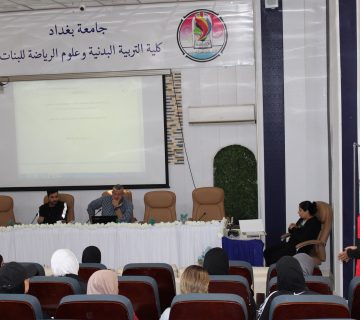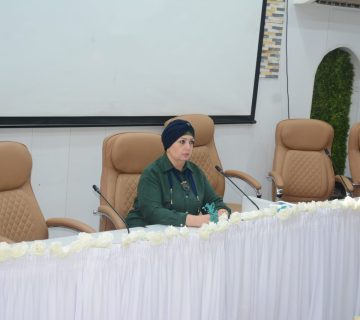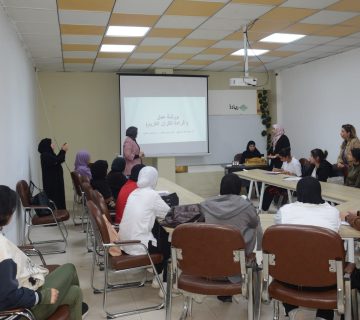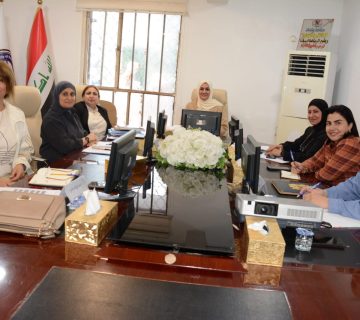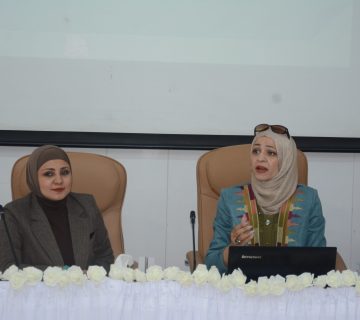


The Ibn Sina E-Learning Unit at the College of Physical Education and Sports Sciences for Women, University of Baghdad, hosted an online scientific workshop entitled )The Importance of Preserving Cultural Heritage and National Traditions(The event was held under the patronage of the Dean, Prof. Fatima Abd Malih, and supervised by the unit’s director, Prof. Dr. Noor Hatem Redha, with the participation of Prof. Dr. Mohammed Qasim Al-Hassani from Uruk University.
The workshop aimed to highlight the concept of national cultural heritage, its types, the importance of preserving it, and the role of legislation in protecting it. It also focused on enhancing cultural awareness and integrating heritage into sustainable development.
Dr. Mohammed defined national heritage as the civilizational legacy left by previous generations across various material and intangible domains. He outlined its types, including:
-
Oral heritage: such as oral narratives, folktales, and vocal arts
-
Written heritage: including documents, books, and manuscripts
-
Built heritage: such as archaeological sites, architectural decorations, and inscriptions
He further explained that heritage is divided into two main categories:
-
Cultural heritage: which includes archaeological landmarks, historical sites, and buildings.
-
Natural heritage: which encompasses geological formations, physiographic features, and natural landmarks.
The speaker emphasized effective methods for preserving national cultural heritage, such as celebrating national occasions, teaching younger generations traditional crafts to ensure their continuity, protecting historical sites, integrating cultural heritage into educational curricula, enacting heritage protection laws, raising national awareness, and involving youth in heritage-related projects.
Toward the end of the workshop, he pointed out the factors threatening cultural heritage, including natural factors such as earthquakes, volcanic eruptions, floods, storms, hurricanes, and fires, as well as human factors such as urban expansion, development projects, wars, occupation, vandalism, neglect, theft, smuggling, lack of legislation, and limited funding.
This workshop contributes to several Sustainable Development Goals, including Goals 4 (Quality Education), 11 (Sustainable Cities and Communities), and 17 (Partnerships for the Goals).
The Ibn Sina E-Learning Unit at the College of Physical Education and Sports Sciences for Women, University of Baghdad, hosted an online scientific workshop entitled )The Importance of Preserving Cultural Heritage and National Traditions(The event was held under the patronage of the Dean, Prof. Fatima Abd Malih, and supervised by the unit’s director, Prof. Dr. Noor Hatem Redha, with the participation of Prof. Dr. Mohammed Qasim Al-Hassani from Uruk University.
The workshop aimed to highlight the concept of national cultural heritage, its types, the importance of preserving it, and the role of legislation in protecting it. It also focused on enhancing cultural awareness and integrating heritage into sustainable development.
Dr. Mohammed defined national heritage as the civilizational legacy left by previous generations across various material and intangible domains. He outlined its types, including:
-
Oral heritage: such as oral narratives, folktales, and vocal arts
-
Written heritage: including documents, books, and manuscripts
-
Built heritage: such as archaeological sites, architectural decorations, and inscriptions
He further explained that heritage is divided into two main categories:
-
Cultural heritage: which includes archaeological landmarks, historical sites, and buildings.
-
Natural heritage: which encompasses geological formations, physiographic features, and natural landmarks.
The speaker emphasized effective methods for preserving national cultural heritage, such as celebrating national occasions, teaching younger generations traditional crafts to ensure their continuity, protecting historical sites, integrating cultural heritage into educational curricula, enacting heritage protection laws, raising national awareness, and involving youth in heritage-related projects.
Toward the end of the workshop, he pointed out the factors threatening cultural heritage, including natural factors such as earthquakes, volcanic eruptions, floods, storms, hurricanes, and fires, as well as human factors such as urban expansion, development projects, wars, occupation, vandalism, neglect, theft, smuggling, lack of legislation, and limited funding.
This workshop contributes to several Sustainable Development Goals, including Goals 4 (Quality Education), 11 (Sustainable Cities and Communities), and 17 (Partnerships for the Goals).